Showing posts with label The Strenuous Life. Show all posts

30 August 2019

[The Strenuous Life] Surviving Shia


[The Strenuous Life] First Aid I

NOTE: This post is written to satisfy the ‘Demonstrate treatment of an open wound,’ ‘Demonstrate the correct use of a tourniquet and explain when one should/should not be used.’ and ‘Explain the symptoms and treatment for shock’ requirements of the First Aid Badge

In addition to the badges, The Strenuous Life contains both daily and weekly challenges. The daily challenges include doing an hour of physical activity (typically just my daily workout), and doing a good deed (often satisfied by performing some volunteer work for or donating some money to the Effective Altruism movement). The weekly challenges are called Agons, and they range from physical fitness testing to giving a compliment every day for a week. While I don’t want to spoil them for anyone who hasn’t seen them, suffice to say that in addition to the badge requirements above this post also relates to an Agon I did ages ago.

I think it is worth prefacing this by noting that I am in no way a medical practitioner and this should in no way be interpreted as medical advice. If anything I say here contradicts a legitimate source, trust the other source (and please let me know so that I can update this post). The only way to really learn first aid is to get formal training with experienced instructors, which I strongly recommend for everyone.
In the remainder of this post, I will highlight some differences between civilian first aid (as it was taught to me) and military/survival first aid, explain how to treat open wounds, including when and how a tourniquet should be employed (including a brief demonstration on yours truly), and then outline the symptoms and treatment for shock.
If you’ve had any sort of formal first aid training in the past, it is very likely you’ve encountered some form of the ABCs. During my civilian first aid qualification course, I was taught DRSABCD – Danger, Response, Send for Help, Airway, Breathing, Compressions, and Defribillation (a word which I am still yet to spell correctly on the first attempt). These steps are focused on keeping someone as stable as possible until advanced care arrives (in the form of paramedics/EMTs). Modern emergency services aim to keep the expected response time well under fifteen minutes in an urban area – but what if you aren’t in a modern urban area?

In extreme or remote situations, you may not be able to rely on fast first responders, and you may need to adjust your treatment priorities. In a combat first aid course, I was introduced to a variation on the ABCs: DRCABC – Danger, Response, Catastrophic Haemorrhage (deal with major, life-threatening bleeding), Airway, Breathing, Circulation (deal with minor bleeding). Since then I’ve also come across the additional steps of D – Disability, and E – Evacuation, mostly pertaining to wilderness survival situations.
Todays post focuses on the ‘C’ of Catastrophic Haemorrage. Situations exist where exsanguination (bleeding to death) is the highest priority for first aid treatment, in particular if help is an uncertain or long distance away. If uncontrolled, rapid bleeding is occuring, than it should be your priority to control it. An important aside: It may be difficult for non-trained (or even trained) individuals to distinguish between bleeding that merely looks bad, versus bleeding that immediately threatens life, so I’ll reiterate my recommendation for formal training.
Today let’s use the highly plausible hypothetical posed by the classic song, Shia La Beouf. If you’ve not yet enjoyed this audiological wonder, please listen to it now.
So, for the purposes of this post we can assume that any Danger has been addressed (you’ve just beheaded the actual cannibal who caused your wound), checking for a Response is not necessary (as you are still conscious), and you can’t Send For Help (because you are lost in the woods and your phone is dead), and have now correctly identified that the bleeding must be immediately controlled. In a perfect world, you’ve also been able to put on your first aid gloves.

Looks pretty serious to me!


Before we can assess what level of treatment the bleeding requires, we have to fully expose the wound. Remove any clothing around the injury, cutting it where necessary. Note that if an object or clothing is embedded in the wound that it should be left in place, and you should simply remove as much clothing around it as possible. You should now have a better idea of the magnitude of the bleed. If upon getting a better look at the injured area you no longer assess the bleeding rate as critical, you should continue on with DRCABCDE.
However, if controlling the bleeding remains a top priority, you next apply firm, direct pressure to the wound site. Again, if in a perfect world you can apply a sterile gauze pad, but if that isn’t available, a makeshift bandage is far better than nothing. If this stops the bleeding, continue on with DRCABCDE.

Finally a good use for my Sophomore Orientation t-shirt
If you cannot stop the bleeding with direct pressure, and/or the dressing you have applied becomes soaked through with blood, you may need to apply a tourniquet.
The historically bad reputation of the tourniquet has been almost completely repaired. No longer seen as a last ditch attempt to stop bleeding that would almost certainly result in amputation, the tourniquet is now a standard part of the EMS/Combat medic tool kit. While an uncontrolled major hemorrhage can kill in minutes, a tourniquetted (OK I have even less idea how to spell this than deffib.. derberb.. that word I said earlier) limb is unlikely to suffer any lasting damage in less than two hours. That said, after this window closes, the likelihood of nerve damage and/or amputation begins to increase – which is less of a consideration in an urban environment, but could be extremely relevant in a wilderness survival situation.
The bottom line is, if bleeding from a limb won’t stop, or looks severe enough to cause rapid death – a tourniquet may be appropriate. This is a good point to remind everyone that I’m definitely not a medical expert of any sort, so please please please don’t substitute this advice for that of a real professional. If you want to learn first aid, I can’t recommend getting course qualified enough  (try here if you live in Australia).
Once the decision is made to use a tourniquet, you’ll need two components – something long, strong and strap-like to act as the tournique itself, as well as a torsion device to tighten it enough to stop the bleeding. You should probably also have something to hold the tightened torsion device in place, which can be the ends of the tourniquet itself or a separate item.

Axe only necessary if you must behead a cannibal prior to administering first aid.

The tourniquet should be applied two inches closer to the body than the wound, except where that would place it over a joint – in which case it should be applied just above the joint. After you’ve identified the application site, wrap the tourniquet around the limb and tie it once with a simple overhand knot. Then place the torsion device over the knot, and secure it with a double overhand knot.

This is not a very helpful photo, in retrospect.
Rotate the torsion device until the bleeding from the wound below the tourniquet stops completely (this will likely be painfully tight). Finally, secure the torsion device in place, most likely by tying it to the upper limb. Immediately write the current time somewhere on the tourniquet – this can be vitally important triage information when medical assistance arrives.

My foot was completely numb at this stage, and I didn't even fully tighten the damn thing.
Now that the first ‘C’ has been addressed, finish up the mnemonic – ensure the victim has a clear Airway and is still Breathing (in the hypothetical here, you are impressively still conscious so can safely skim through this check). The next ‘C’ is notionally Circulation, but my understanding is it really references the diagnosis and treatment of any other less urgent conditions. If the victim has just suffered bleeding severe enough to require a tourniquet, odds are good they are also going to be suffering from shock (hypovolemic shock, in this case).
Shock can have many causes, but each displays similar system (associated with a drop in blood pressure and general not-OK-ness). Cool, clammy, or even blue tinged skin, physical weakness and mental confusion, rapid breathing, and eventually unconsciousness all point to shock. Ultimately proper medical treatment is enormously important (I mean, it already was in this situation thanks to the tourniquet), but as a first aider the best you can do is recline the victim on the back, potentially elevating their feet (I found mixed reviews of this as a treatment), keep them warm with blankets, and if they are able to take fluids, slowly hydrate them.
In a real wilderness survival stuation, you’d now develop a plan for contacting/finding help (that’s the Disability and Evacuation section of our acronym). I’ll likely cover some of the basics of Wilderness Survival in another post (you guessed it, for another badge). But for now at least – you’re finally safe from Shia LaBeouf.

01 October 2018

30 Things (Updates & Revisions IV)

In 2010 I set a list of thirty goals for myself to accomplish before I turn thirty. While I’ve made good progress on many of the goals, I have yet to complete many of them – and with my 30th looming in under a year, this will be the final revision to the list. I’ve had to drop a number of goals that realistically cannot be accomplished by next July 17th, and which will form the foundation of my ‘40 before 40’ list. These have been replaced, as have some others which are no longer important goals to me.
Previous Versions:
The 30 & the Things
2-30 2-Things
30 Things: Tokyo Drift
30 Things
Which by the world’s most sensible sequel numbering system makes this post ‘35’.
Moved to ‘40 before 40’
  • Learn to play an instrument
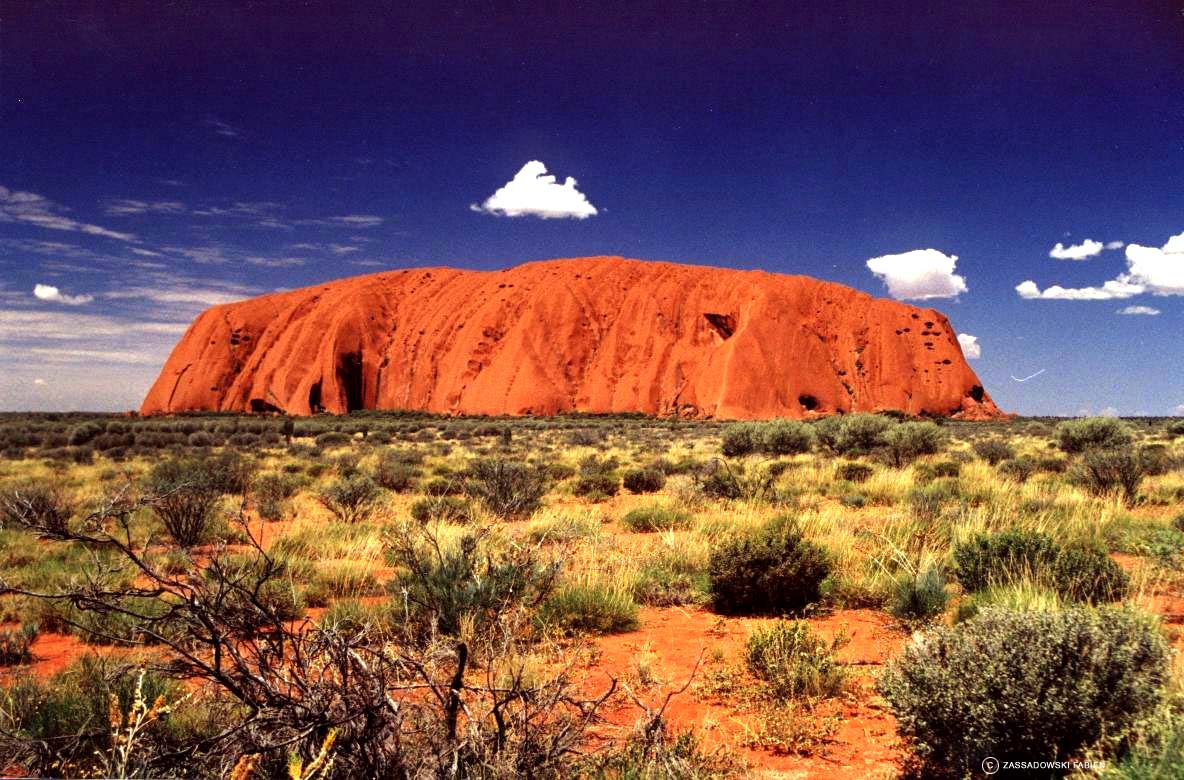
  • Travel to Uluru
  • Purchase some land
  • Te Araroa
  • Visit every continent: 5/7 - I am missing Africa and Antarctic
  • Write a novel
  • Learn a martial art
  • Read the Gateway to 'The Great Books' (and the Great Books themselves)
Totally Incomplete (9/30)
  • Propose to a woman
  • Learn this by my 30th birthday on guitar, so I can subject you all to a live performance (replaced the more ambitious, ‘Learn to Play an Instrument’)
  • Eat at a Three Hatted restaurant
  • Road trip Across Australia (replaced ‘Travel to Uluru’ simply due to a change in logistics)
  • Get a Fitted Suit (new, but not replacing anything in particular)
  • Grow and eat my own food
  • Walk 50mi in 20h (replaced ‘Hike Te Araroa’ as both a Strenuous Life goal, and a good hiking alternative)
  • Craft Something (new, but not replacing anything in particular)
  • Host dinner party (4+ guests, 4+ courses) (new, but not replacing anything in particular)
  • Start Lucid Dreaming again (new, but not replacing anything in particular)
  • Get a DNA test (new, but not replacing anything in particular)
In Progress (6/30)
  • Still Omitted: Progress slow and boring
  • Get a tattoo: Design is picked so I need to actually take some time and find a good place to get it done - maybe this summer.
  • Get a PhD
  • Put together a GOOD bag and BOAT
Completed (15/30)
  • Become a member of the ADF (Reserve)
  • Save (in some form) at least $15,000 (AUS)
  • Go on a date without regard to cost
  • Give blood
  • Omitted and completed
  • Give away or sell all my excess junk after graduation
  • See a country music act live in concert
  • Have a research paper published (several now!)
  • Drive a car faster than 100 mph
  • Fly in a helicopter
  • Cook my way through a cookbook
  • Spend a week in the woods: Field portion of my last training block
  • Learn to ride something with 4 legs or less than 4 wheels: Know how to ride a motorbike (though still need to buy my permit)
  • Swim naked in the Pacific Ocean (finally!)
  • Omitted and completed (was on my original list, then removed, then re-added and completed – what a thrilling rollercoaster)

18 October 2017

[The Strenuous Life] Easy Rider Badge I


NOTE: For anyone who missed my last piece about [The Strenous Life] tagged posts, read it before this one! This post is written to satisfy the "Name basic types of motorcycles and features" requirement for the ‘Easy Rider’ badge.


The ‘Easy Rider’ badge on the Strenous Life is (unsurprisingly) focused around getting one’s motorcycle license. I know how to ride reasonably well, and own a motorcycle , and even had my learner’s permit for a year. Unfortunately, I didn’t have the time or money to take the licensing test when I first got it. Thanks to the New South Wales government, there is no way to renew a permit without forking out a stack of cash and spending two days doing remedial review on how to start a motorcycle and similar things. The upshot is that I’ll have to wait until I’ve got a paying job and a weekend to burn re-learning the basics to start working toward my license again.

For now I’ve had to settle for learning a bit about motorcycles, and how to operate and maintain them. This has included some more general mechanical knowledge (I finally know what a carburetor does), and random motorcycle specifics (like why two-strokes need oil mixed in with their fuel). In this series of posts I’ll be summarizing the six main types of motorcycles, listing the major mechanical components and controls that make them go VROOOOM, and briefly describing the pre-ride inspection as it applies to my own bike.

I call her Kira


Without further ado, lets dig into the different types of motorcycles. According to Wikipedia (or rather, the four sources that Wikipedia points to), the most widely recognized classes are Standard, Cruiser, Touring, Sport, Dual-sport, and Offroad. There are also the various sub-categories of scooter, which won’t be covered here.

My own bike is a standard or “naked” bike, which disappointingly has nothing to do with whether or not I need to be clothed to ride it (always wear your full safety gear, kiddos). These bikes are characterized by a lack of fairings (the sleek-looking bits that cover the front end of sportier motorcycles), no windscreens, and an upright riding position where one’s shoulders are above the hips. Great for beginners, they are the vanilla ice cream of motorcycles.

So much cooler than me

This makes choppers, like the Goldblumobile from Nashville, those weird Ben & Jerry's flavours that cost $50 a pint. They come in all shapes and sizes, but generally are a cut-down and customized (‘chopped’) version of a production cruiser, our second type of motorcycle. Cruisers still lack fairings and windscreens, but unlike naked bikes the riding position is leaning-back, with the riders feet forward and hands up. They tend to have low-end torque (meaning less shifting gears at low speed), but wind against the rider’s chest can make riding them at high speeds tiring. Ideal for, well, cruising.

But what if you are really looking for a small, non-sporty, two-wheeled convertible, with the top always down? Enter the touring bike. Typically with both fairings and windscreens, these bikes provide relatively good weather and wind protection. The riding position on touring bikes is relaxed and upright, which combined with the large fuel tanks means long distance travel is both possible and comfortable. Ample storage space has earned these bikes several (not entirely complimentary) nicknames: bagger, full bagger, dresser, full dresser, and full dress tourers.

Although this one prefers to be called 'Steve'

On the other hand, if you want the vroomiest vroom out of your bike, you are probably better served by getting a Sport motorcycle. Like the touring bike, sport bikes have windscreens and fairings, but - and this a critically important distinction - much cooler looking windscreens and fairings. Instead of sitting upright like a chump, you ride leaning forward, with your legs up and back, and your arms reached out in front of you. This position allows the wind resistance to actually support your body at high speeds, and makes it easier to take those ridiculous racing corners where your knees almost scrape the ground. These bikes are way too cool for me, and I’ll probably never own one.

The remaining two bike types are slightly different from the others. While the previous types have all been designed with various road-uses in mind – dirt bikes are for the roads less travelled (the ones that aren’t actually roads). The dual-purpose/dual-sport bike is either an off-road worthy naked bike, or a road-worthy dirt bike (and more commonly the latter, from what I am given to understand).

So there we have it – six types of bikes. For the next two posts on this topic (going over parts and controls, and the pre-ride inspection), I’ll be focusing on my own bike – a 2006 Honda VTR250, but will try to note where significant different possibilities exist. Or not, it’s my blog after all and I can be as capricious and inconsistent as I like.

05 May 2017

[The Strenuous Life] The Strenuous Life


TLDR: This post is about a new self-improvement platform I’m beta testing called ‘The Strenuous Life’; if that is of no interest to you, then what do you think of this?. The bottom line is that you can safely ignore posts with [The Strenuous Life] prefixed to the title, unless you want a glimpse into some of the stuff I’m learning in my spare time.
“Let those who have, keep, let those who have not, strive to attain, a high standard of cultivation and scholarship. Yet let us remember that these stand second to certain other things. There is a need of a sound body, and even more of a sound mind. But above mind and above body stands character – the sum of those qualities which we mean when we speak ofa man’s force and courage, of his good faith and sense of honor.” - Theodore Roosevelt (Citizenship in a Republic)
I made my first (cringe-inducing) post on this blog a little under seven years ago. I probably could not have fully expressed my reasons at the time, but the creation of a new blog was just a minor component of a larger effort of self-improvement that began when I graduated high school.

PICTURED: Awkward Chubby Nerd

Don’t get me wrong – I actually had a great time being an awkward chubby nerd, and I spent many an enjoyable afternoon playing Halo 2, Magic, and/or Dungeons and Dragons instead of doing whatever it was the cool kids did
 (Drinking? Going to pep rallies? Hanging out at the pep rally drinking and singing show tunes?).

PICTURED: Cool Kids, probably

But I certainly wasn’t living my best of all possible lives – and I knew it. The main reason I was so eager to graduate early was because going to university represented an opportunity to re-invent myself, and start becoming the man I wanted to be.

PICTURED: The Man I Want to Be

I discovered the Art of Manliness blog soon after I arrived at uni, and have been following it ever since. It provides consistently high quality content on a wide range of topics, which almost always correlates well with my own self-improvement goals. Recently Brett McKay, the founder of AoM, launched a new project called ‘The Strenuous Life’; it’s a sort of a self-paced online gamified Scouts program for adults, complete with physical badges available for completing various requirements. This is definitely my bag, so I was thrilled to be one of the 150 accepted into the beta testing “Red Team” for the last couple months.

The badges cover a huge range of skills/topics - from ‘Sharpshooter’ to ‘Orator’ to ‘Kiss the Chef’ - and have all sorts of requirements - including reading (‘Read “Citizenship in a Republic”'), writing (‘Describe the different types of motorcycle’), and physical effort (‘Walk 50 mi. in 24 hours’). There are also daily check-ins for exercise and good-deed-doing, and weekly challenges (‘Take a 5’ cold shower every day’). The format is going to change somewhat before it goes live, so I won’t go into any more detail until I see the final form, but I can say that as it currently exists (1) I find it extremely motivating, and (2) I endorse it completely for anyone seeking broad-based self-improvement.

Now, I’ve been working through a few of these badges in my pomodoro breaks and have decided that the most efficient/self-motivating way to do the writing tasks is to structure them as blog posts. While my blog posts are frequently rambling self-indulgent drivel written primarily for my own amusement, usually they are at least original rambling self-indulgent drivel. Those that will be going up with [The Strenuous Life] tag are most often going to be a summary of information easily obtainable from other sources, so may be of even less interest than my typical fare. YOU HAVE BEEN WARNED.

Stay tuned for the next Strenuous Life post, where I attempt to learn all about motorcycles (for the ‘Easy Rider’ badge).

“I live The Strenuous Life.
I train for harmony in body, mind, and soul.
I am strong to be useful.
I choose action over abstraction.
I do hard things.
I live The Strenuous Life.”